

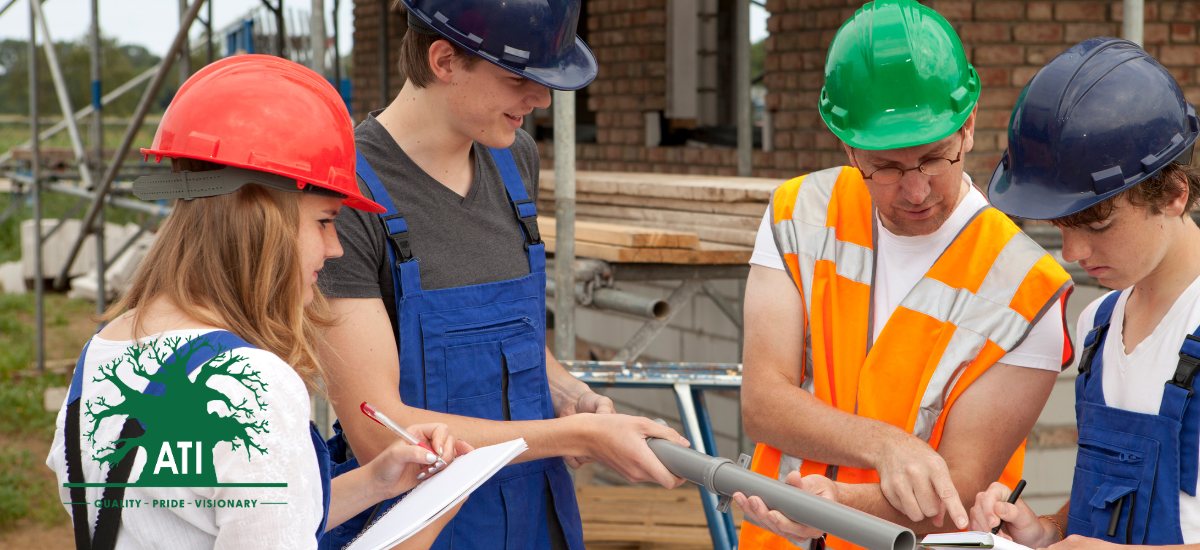
A common misconception is that automation threatens artisan jobs. The evidence tells a different story. The trades of tomorrow are not a fallback. They are a foundation.
Thought Leadership | Skills Development & Brand Essence
By Artisan Training Institute
The global economy is undergoing a seismic shift. As artificial intelligence reshapes white-collar work and automation reconfigures factory floors, one sector is quietly emerging as among the most recession-resistant and future-proof of all: the skilled trades.
In South Africa, this trend carries particular urgency and opportunity.
The Numbers Don’t Lie
According to the Department of Higher Education and Training, South Africa faces a shortage of over 30,000 qualified artisans across the electrical, mechanical, and construction sectors. The Manufacturing Circle estimates that this deficit costs the economy billions of rands annually in delayed infrastructure projects, imported skills, and lost productivity.
Meanwhile, global data from the International Labour Organization (ILO) projects that demand for skilled tradespeople will grow by 19% through 2030, even as demand for routine administrative roles contracts sharply. In the United States, the National Centre for Education Statistics reports that trade apprentices earn starting salaries comparable to four-year university graduates but carry a fraction of the student debt.
South Africa’s trajectory mirrors this global pattern.
Automation Is Not the Enemy, It’s the Employer
A common misconception is that automation threatens artisan jobs. The evidence tells a different story. Electricians who understand smart home systems command premium rates. Welders certified in robotic-assisted processes are in short supply across the automotive sector. Plumbers integrating solar water heating and greywater recycling systems are booked weeks in advance.
The World Economic Forum’s Future of Jobs Report 2025 identifies “manual dexterity combined with technical adaptability” as one of the top five skills clusters that AI cannot replicate in the medium term. Physical trades by their nature require human judgment, on-site problem-solving, and tactile expertise that no algorithm can perform.
The artisan of tomorrow is not being replaced by technology. They are being empowered by it.
Infrastructure Demand as a Growth Catalyst
South Africa’s infrastructure backlog is well-documented. The government’s Infrastructure Fund has committed over R1 trillion to infrastructure investment over the next decade, spanning energy, water, roads, and housing. Every rand of that investment requires boots on the ground, qualified artisans to install, commission, maintain, and repair.
Energy transition alone is creating enormous demand. The rapid expansion of renewable energy across wind, solar, and hybrid projects require electricians, instrumentation technicians, and civil construction artisans at scale. Municipalities and private sector developers alike report that project delays are increasingly attributable not to funding shortfalls, but to skills shortfalls.
What This Means for Individuals and Institutions
For young South Africans weighing career options, the data points clearly. A qualified artisan with a red seal trade test can earn between R25,000 and R60,000 per month within five to eight years of training, depending on the trade and sector. Entry barriers are lower than university degrees, training periods are shorter, and employment rates on qualifications are significantly higher.
For employers, the cost of not investing in artisan pipelines is rising. Skills poaching, foreign skills visas, and contractor premiums are all symptoms of a sector that has underfunded training for too long.
The trades of tomorrow are not a fallback. They are a foundation.
info@artisantraining.co.za | www.artisantraining.co.za | +27 (0)11 472 3443
Engineering better futures for everyone.
Artisan Training Institute provides accredited trade training across South Africa, equipping learners with the technical competence and workplace readiness to build meaningful careers in the skilled trades.