Shape Innovation with the Sheet Metal Worker Trade at ATI
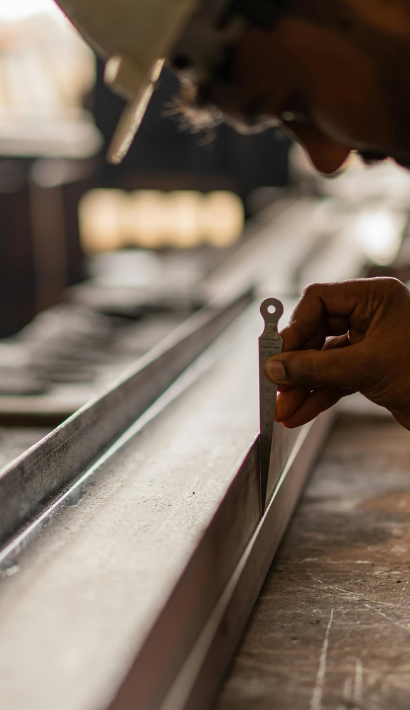
At ATI, we train future sheet metal workers to design, fabricate, and install metal components that bring structures and machinery to life. Our hands-on training, combined with technical expertise, equips you to cut, bend, and assemble sheet metal with precision and creativity.
From crafting ductwork and roofing to custom metal solutions, you’ll develop the skills that turn raw materials into durable, functional, and innovative creations. At ATI, every sheet you shape is a step toward a career built on craftsmanship, ingenuity, and excellence.
Qualification purpose
The purpose of this trade qualification to prepare a learner to be involved in a sheet metal manufacturing processes environment. A qualified learner will be able to:
- Manufacture various types of components out of sheet metal with the maximum thickness of three millimetres.
- Work with different types of metal, such as tin, copper, zinc, stainless steel, bronze and aluminium to manufacture a large variety of articles.
- Specifications are received in the form of drawings, plans or even modules. The specifications/developments are measured and traced onto the metal where the metal should be cut, bent, rolled or joined. The metal can be cut and shaped by hand or shaped specifically by machining processes.
- Sheet metal workers are also responsible for the cleaning and rounding off components. Sometimes the
articles must be treated against rust by galvanising, tinplating or treating them with certain chemicals
Foundational Learning Competence (SAQA Minimum Entry Level)
NQF Level 1 qualification with Mathematics and Science.
Trade test requirements
Learner should have passed:
- N2 Mathematics, Engineering Science, Engineering Drawings, Sheet Metal Trade Theory
- N2 Certificate including the four relevant subjects of maths, engineering science and a fourth subject as
required by the trade: or
- Technical trade theory programs quality assured by a SETA deemed to be equivalent to NQF level 3 (N2);
or
- Relevant Engineering NCV Certificate with seven subjects at NQF level 3; or
- Technical Grade 11 with Maths, Science, Language, and related trade theory subject; or
- Relevant (directly related to the trade theory subjects) N6 certificate or National Technical Diploma (T, S
or N stream.)
In addition to the above-mentioned minimum educational qualification the applicant must also have:
- Successfully completed all off the job practical training unit standards (in the case of learnerships) or modules (in the case
of an apprenticeship) of an artisan learning program at an accredited training provider as verifiable by training records
(logbook).
- Satisfied the requirements of the structured workplace, on the job, learning for a minimum period of 12 months verifiable
through a workplace learning record (e.g. logbook) unless any other workplace period has been contractually specified before the date of publication of this Regulation.
Note: A Logbook is a record of all training the learner has received, contributing to their portfolio of evidence.
Skills obtained as outcomes
- Operate sheet metal forming machinery in the metal and engineering related environment
- Assemble sheet metal products in the manufacturing environment.
- Explain the use of engineering drawings and marking-off procedures for regular engineering shapes.
- Recognising and responding to problems / defects of materials and assemble product.
- Interpretating an engineering drawing using knowledge of isometric and orthographic views
- Collect, analyse organise and critically evaluate information to classify the information from the process
and the products and identify deviations from the form.
Qualification outcome
Qualified Metal & Engineering Manufacturing Processes (red seal) Internationally Recognised
Types of jobs pertaining to the trade
- Entrepreneur / Contractor
- As an employee in any of the industries listed
Industries where they can work if qualified
- Manufacturing
- Mining
- Civil
- Agriculture
- Aerospace
- Anywhere where there are sheet metal products to be made or maintained.
Approximate trade duration
Off the job practical training.
- Phase 1 – Duration – 12 Weeks
- Phase 2 – Duration – 12 Weeks
- Phase 3 – Duration – 8 Weeks
- Phase 4 – Duration – 4 Weeks (Revision and Trade Test)
Workplace (on the job) experience
- 18 months. Registered learner with a SETA.
- 3 years ARPL route.
Contact us now for more information at any of our nationwide branches.